
Solar panels and batteries near the coast: salt air and what the makers require
Checked and updated by our licensed electricians: October 2026
Salt carried on the sea breeze settles on metal and, with our humid Northern Rivers air, slowly corrodes frames, rails, fasteners, connectors and enclosures. The panel and battery makers we install all write rules for this, and most of them draw the line at about 500 metres from the coastline. We install the same way everywhere, to Australian standards and each maker’s own manual; near the beach, those manuals decide which battery suits your home and where it can go.
Get my free energy assessment →
We’ll text you within minutes. Or call 0483 903 020.
What salt air does to a solar and battery system
The glass on a panel copes with salt well. The weak points are the metal parts and the joins. AIKO’s installation manual notes that in coastal areas exposed to salt fog, corrosion can occur where the panel meets the mounting rails and at the earth connection, so anti-corrosive materials such as stainless steel or aluminium must be used in contact with the panels. Jinko’s manual focuses on the plug connectors between panels. The battery and inverter makers worry about their metal enclosures and terminals, which is why most of them set a distance from the sea.
How far the salt reaches is not the same at every address. GoodWe’s manual says the affected area depends on sea breeze, rainfall and topography, so a house behind a dune or a hill can be quite different from one facing the surf.
Where this matters in the Northern Rivers
Many homes in our coastal towns sit within a few hundred metres of the beach: Byron Bay, Suffolk Park, Lennox Head, Brunswick Heads, Pottsville, Kingscliff, Evans Head, and parts of Ballina and Ocean Shores close to the water. Homes further inland, around Mullumbimby, Bangalow, Alstonville or Lismore, are generally well outside these distances.
What the panel makers say
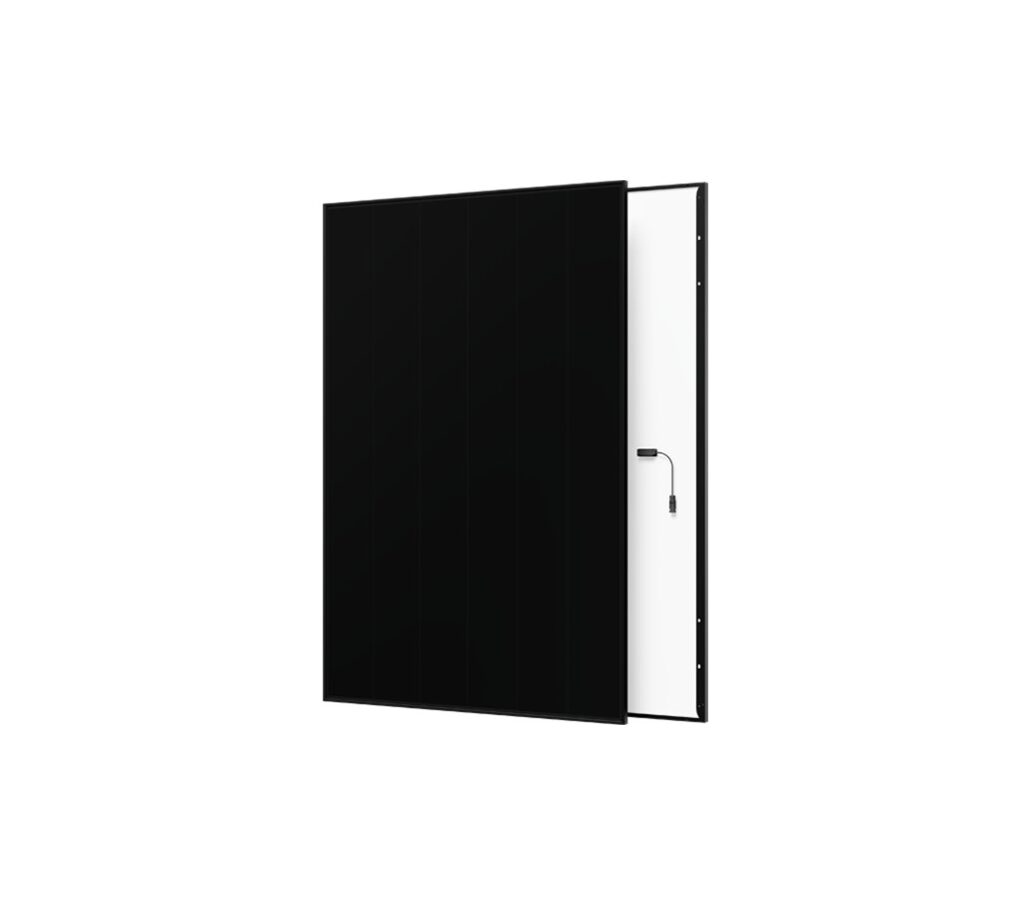
- AIKO (Neostar): AIKO publishes TUV Rheinland certificates showing its third-generation mono-glass and dual-glass panels were tested to IEC 61701:2020, the international salt-mist corrosion test (issued 2025, valid to 2029). Its installation manual says panels can be installed 50 m to 500 m from the seashore, with the frame and related parts treated against corrosion in that zone, and anti-corrosive materials in contact with the panels in salt-fog areas. Not installing to the manual voids AIKO’s product warranty.
- Jinko (Tiger Neo): Jinko’s Australian Tiger Neo datasheet lists “high salt mist and ammonia resistance”. Its installation manual sets a minimum distance of 50 m from the seashore, and between 50 m and 500 m the connectors must be protected (dust plugs until they are joined, then connected straight away, plus other anti-rust measures).
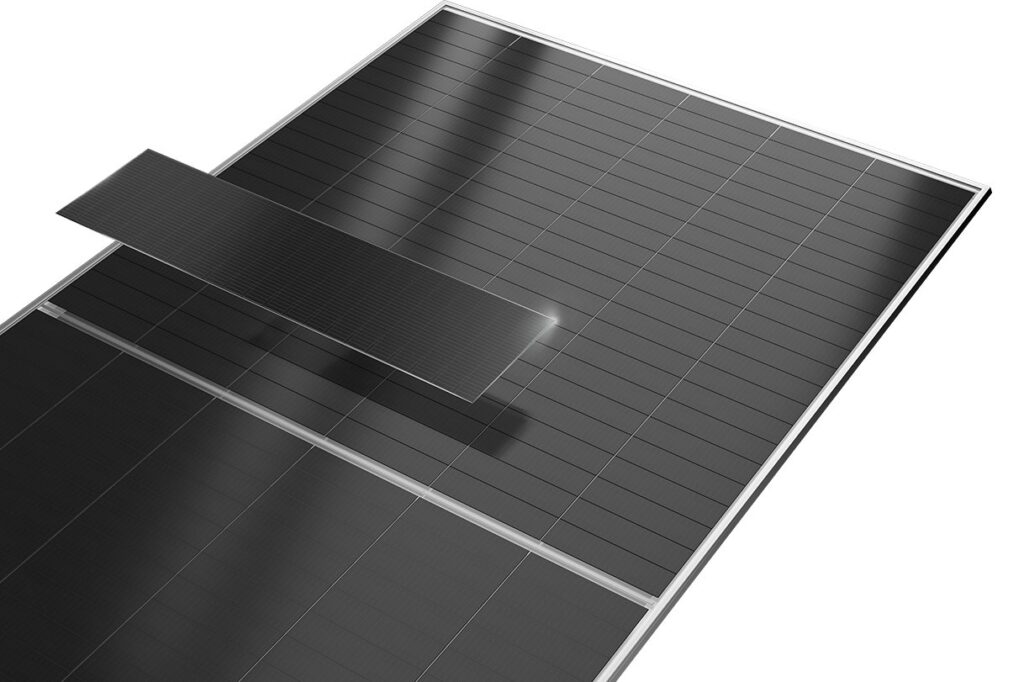
More on the panels: AIKO solar panels, Jinko solar panels and AIKO vs Jinko.
What the battery and inverter makers say
| Battery | Installation manual near the sea | Warranty wording |
|---|---|---|
| Sigenergy SigenStor | Install at least 500 m from corrosion sources such as the seaside; sheltered place, out of direct sun and rain | Current Australian SigenStor warranty: no distance clause; excludes rust caused by harsh environmental conditions |
| GoodWe ESA | Consult GoodWe before installing outdoors within 500 m of the coastline (area depends on sea breeze, rain and terrain); IP66 | Excludes faults from exposure to sea coasts or saltwater without GoodWe’s written approval before the install |
| SolaX X1-VAST + HS51 | Inverter at least 500 m from the coast, out of direct sea breeze; battery away from corrosive environments; IP66 | Excludes corrosion and installation in a corrosive environment |
| Sungrow SBH | Not within 500 m of the coastline or where prone to sea winds; IP55, indoor or outdoor | Sungrow’s Australian battery warranty requires use in line with its specification and installation manual |
| Tesla Powerwall 3 | No coastal distance found in the documents we could check; keep it clear of flooding and water sources | No coastal clause found in the Australian warranty (Rev. 1.16) |
From each maker’s own installation manual and Australian warranty document (listed under Sources), checked 15 October 2026. These documents change, so we check the current version for your exact model.
What it means if you live near the beach
- More than about 500 m from the coastline: the usual install for every brand we fit, still in a sheltered position, as the makers ask.
- Within about 500 m: AIKO and Jinko panels are allowed from 50 m with their extra anti-corrosion steps. For the battery, Sigenergy, Sungrow and the SolaX inverter say to stay 500 m away, and GoodWe asks for its say before an outdoor install, with salt damage excluded from its warranty unless it approved the install in writing. So the brand and the spot need checking before anything is ordered.
- Closer than 50 m: outside both panel makers’ manuals; the maker has to be asked first.
A sheltered spot also matters: several of these manuals ask for the battery or inverter to be out of direct sun, rain and sea breeze. See where a home battery can be installed and battery IP ratings, storms and floods.
How we handle it
- The same install everywhere. Every system is installed to the Australian standards for solar arrays (AS/NZS 5033) and battery systems (AS/NZS 5139), and to each maker’s own installation manual. All the products we use are made to Australian standards for use in Australia.
- We check the makers’ rules for your address. Distance from the coastline is part of what decides whether a battery position is compliant, so it is checked before your install, along with the wall, clearances, weather exposure and the switchboard.
- A face-to-face site visit before every install, so the battery goes somewhere compliant and sensible, with no surprises on the day.
- Our own in-house team, no subcontractors.
- Warranties: our 25-year workmanship warranty covers our installation work. The panels, inverter and battery carry the makers’ own warranties, with the coastal conditions above. See where to find your battery warranty.
The batteries we fit: Sigenergy (premium), GoodWe (mid-tier), and SolaX, Sungrow and Tesla Powerwall. Comparing two? See GoodWe ESA vs SolaX or Sigenergy vs GoodWe vs Tesla.
Why locals choose us
- Our own in-house team designs every system and does every install. 25 years in solar and large commercial electrical work. No subcontractors.
- A face-to-face site visit before every install: compliant battery position, switchboard and RCBO check, no surprises on the day.
- SAA-accredited installer and Sigenergy-approved, with a 25-year workmanship warranty on our installation work.
Questions we get asked
Can I have solar panels near the beach?
Yes. AIKO’s and Jinko’s installation manuals both allow panels from 50 metres of the seashore, with extra anti-corrosion steps between 50 and 500 metres: AIKO asks for anti-corrosion treatment of the frame and related parts, and Jinko asks for the connectors to be protected. Closer than 50 metres is outside both manuals, so the maker has to be asked first.
How close to the sea can a home battery go?
It depends on the brand. Sigenergy’s SigenStor guide says at least 500 m from corrosion sources such as the seaside. Sungrow’s SBH manual says not within 500 m of the coastline or where it is prone to sea winds. SolaX says at least 500 m for the X1-VAST inverter. GoodWe’s ESA manual says to consult GoodWe before installing outdoors within 500 m. We found no distance rule in the Tesla Powerwall 3 documents we could check.
Does salt air void my battery warranty?
It can. GoodWe’s Australian ESA warranty excludes faults caused by exposure to sea coasts or saltwater without GoodWe’s written approval before the install. SolaX’s Australian warranty excludes corrosion and installation in a corrosive environment. Sigenergy’s current SigenStor warranty excludes rust caused by harsh environmental conditions. That is why the brand and the position are checked against your address before anything is ordered.
Are AIKO panels salt-mist rated?
Yes. AIKO publishes TUV Rheinland certificates showing its third-generation panels were tested to IEC 61701:2020, the international salt-mist corrosion test for solar panels. Jinko’s Tiger Neo datasheet lists “high salt mist and ammonia resistance”.
Do you install differently near the coast?
No. We install the same way everywhere, to the Australian standards and to each maker’s own installation manual, with our own team and a site visit before every install. Near the beach, the makers’ rules are what change: they decide which battery suits your home and where it can go.
I live a street back from the beach. Does this apply to me?
Possibly. Most of the makers draw the line at about 500 metres from the coastline, and GoodWe notes that the affected area also depends on sea breeze, rain and the lie of the land. Give us your address and we check it against each maker’s rule for the products in your design.
Sources
Last checked 15 October 2026. Only the manufacturers’ own manuals, datasheets, certificates and warranty documents (and the Australian Government for standards) are used. Makers update these documents, so we check the current version for your exact model before your install.
- AIKO’s official salt-mist certificates (IEC 61701:2020, TUV Rheinland), from the Neostar product page
- AIKO Australia: Neostar 3P54 product page and datasheet
- AIKO PV Module Installation Manual, Mono Glass, Version 4.0 (distributor copy)
- Jinko’s official Tiger Neo N-type datasheet
- JinkoSolar Installation manual for Photovoltaic Module (distributor copy)
- Sigenergy’s SigenStor Home Installation Guide: site requirements
- Sigenergy’s Factory Limited Warranty for SigenStor (Australia and New Zealand)
- GoodWe’s official ESA 3-10kW User Manual (V1.8)
- GoodWe’s Limited Warranty for the ESA 3-10kW (Australia and New Zealand)
- SolaX’s official X1-VAST User Manual (Version 3.0)
- SolaX’s official TSYS-HS51 User Manual (Version 5.0)
- SolaX’s Warranty Terms and Conditions V1.6 (Australia market)
- Sungrow’s official SBH100-400 User Manual (Ver16)
- Sungrow’s Battery Limited Warranty Terms and Conditions, Australia (V1.2)
- Sungrow’s Battery Limited Warranty Terms and Conditions, Australia (V1.2)
- Tesla’s Powerwall Warranty, Australia and New Zealand (Rev. 1.16)
- Tesla’s Powerwall 3 Owner’s Manual: important safety instructions
- Australian Government (ABLIS): solar system standards, including AS/NZS 5033 and AS/NZS 5139
More from Sun Connect Solar
- Where can a home battery be installed?
- What size home battery do I need?
- Blackout backup batteries
- How long do solar panels and inverters last?
- How it works
See it on a real job: 8.4 kW Jinko solar and a 24 kWh Sigenergy battery in Ocean Shores.