
How long do solar panels, inverters and batteries last, and what is covered?
Checked and updated by our licensed electricians: October 2026
Solar panels commonly last 20 to 30 years, inverters often need replacing sooner (typically 10 to 15 years for a string inverter), and a lithium battery typically 10 to 15 years, according to the Australian Government. Here is what that means, and what is covered if something goes wrong. For batteries, jump to how long do solar batteries last.
Get my free energy assessment →
We’ll text you within minutes. Or call 0483 903 020.
Average lifespans
| Part | Average lifespan (energy.gov.au) |
|---|---|
| Solar panel | 20 to 30 years |
| Lithium-ion battery | 10 to 15 years |
| String inverter | 10 to 15 years |
| Microinverter | 20 to 25 years |
How long each part lasts depends on use and maintenance. A battery cycled every day wears faster than one used occasionally. It is common for an inverter to be replaced within the life of the panels.
What is covered
- Panel performance: almost all panels come with a 25-year performance warranty, a promise about minimum output rather than just defects. A standard example from the government is 90% of rated power up to 10 years and 80% up to 25 years. Ours: AIKO and Jinko panels with a 25-year performance warranty.
- Inverter: typically 5 to 10 years across the industry. The inverters we install carry a 10-year replacement warranty.
- Battery: many makers give a 10-year product warranty, often with a minimum capacity or throughput, so read the conditions. Ours carry a 10-year battery warranty.
- Workmanship: 25 years from us on our installation work. The industry norm is about 5 years. Equipment is covered by the manufacturers.
How long do solar batteries last?
A home lithium battery typically lasts 10 to 15 years (Australian Government figure). The two brands we install most, Sigenergy and GoodWe, both carry a 10-year warranty that promises the battery will still hold at least 70% of its usable energy at 10 years, or until it has delivered a set amount of energy, whichever comes first. A battery does not usually stop at 10 years: it slowly holds less.
What wears a battery out
- Cycles: every charge and discharge uses a little of the battery’s life. A battery cycled fully every day wears faster than one used lightly.
- Heat: Sigenergy’s manual says the higher the temperature, the shorter the service life, and above 40°C the battery may cut back its power to protect itself. Sigenergy recommends a working temperature of 10 to 30°C.
- Time: lithium cells slowly lose capacity with age, even when they are not used much.
What the Sigenergy and GoodWe battery warranties actually promise
| Sigenergy SigenStor (9 kWh module) | GoodWe ESA (8 kWh module) | |
|---|---|---|
| Product warranty | 10 years (battery and energy controller) | 10 years (battery modules and ESA inverter) |
| Performance promise | At least 70% of usable energy for 10 years, or 33.29 MWh delivered per module, whichever comes first | At least 70% of usable energy within 10 years, or 29.2 MWh delivered per module, whichever comes first |
| In plain English | About 3,700 full cycles: roughly one full charge and discharge a day for 10 years | About 3,650 full cycles: GoodWe says the warranty covers about one full cycle a day |
| Conditions worth knowing | Keep it connected to the internet for firmware updates: if it is offline for more than a year, the warranty drops to 5 years from activation. Recommended working temperature 10 to 30°C. | Not in direct sunlight; charging between -18 and 55°C. The performance promise covers the battery cells; other parts are covered by the product warranty. |
From the makers’ own Australian warranty documents: Sigenergy SigenStor warranty (AU and NZ) and GoodWe ESA warranty (AU and NZ). Your rights under the Australian Consumer Law apply on top of these. Our own 25-year workmanship warranty covers our installation work.
Why the battery position matters
Because heat shortens battery life, we choose the battery position on the face-to-face site visit before every install: out of direct sun, with the space and ventilation the manual asks for, and compliant with the rules for where a battery can go. See where a home battery can be installed.
What happens when a battery gets old
As it ages, a battery covers less of your evening. When it no longer does the job, you can add modules where the system allows it, or replace the battery, and the old one should go to a proper recycler: see solar battery recycling and disposal. For our own installs, call us first if anything looks wrong: we deal with the manufacturer for you.
More on the batteries we install: Sigenergy batteries, GoodWe batteries and home battery prices by size.
Looking after it
The government suggests a service about every 2 years by an accredited installer or qualified electrician, and monitoring so you notice if output drops. See our maintenance checks, what to check if solar is not producing and solar inspections. We do not repair systems we did not install.
Read about the panels we use: AIKO, Jinko and AIKO vs Jinko. Battery warranty documents: where to find yours.
Why locals choose us
- Our own in-house team designs every system and does every install. 25 years in solar and large commercial electrical work. No subcontractors.
- A face-to-face site visit before every install: compliant battery position, switchboard and RCBO check, no surprises on the day.
- SAA-accredited installer and Sigenergy-approved, with a 25-year workmanship warranty on our installation work.
Questions we get asked
How long do solar panels last in Australia?
The Australian Government gives 20 to 30 years as the average lifespan, and good modern panels should last at least 20 years.
Will I need to replace the inverter?
Probably once during the life of the panels. String inverters often last 10 to 15 years.
Do panels stop working after 25 years?
No. The 25 years is a performance warranty period; panels degrade slowly, and many keep generating beyond it.
How long does a home battery last?
Typically 10 to 15 years for lithium-ion, depending on how it is used, with a manufacturer warranty usually around 10 years.
What does a 10-year battery warranty actually promise?
For the two batteries we install most, the maker promises the battery will still hold at least 70% of its usable energy at 10 years, or until it has delivered a set amount of energy, whichever comes first. That amount is 29.2 MWh per 8 kWh GoodWe ESA module and 33.29 MWh per 9 kWh Sigenergy module, which is roughly one full charge and discharge a day for 10 years. Sigenergy also needs the battery kept connected to the internet for firmware updates.
Does heat shorten a solar battery’s life?
Yes. Sigenergy’s manual says the higher the temperature, the shorter the service life, and above 40°C the battery may cut back its power. Sigenergy recommends a working temperature of 10 to 30°C, and GoodWe’s warranty says the battery must not sit in direct sunlight. That is why we choose a shaded, ventilated battery position on the site visit.
Sources
Last checked 15 October 2026. Only the manufacturer’s, the network’s or the government’s own documents are used; app menus and defaults change between models and versions, so if your screen looks different, call us rather than guess.
- energy.gov.au: Replace and recycle your solar system
- energy.gov.au: Warranties and insurance
- energy.gov.au: Look after your solar system
- Sigenergy: Factory Limited Warranty for SigenStor, Australia and New Zealand (26 May 2026)
- GoodWe: Limited Warranty for ESA (3-10kW), Australia and New Zealand (Rev 1.0, July 2025)
- Sigenergy: SigenStor Home User Manual, single-phase system (operating temperature section)
More from Sun Connect Solar
- Understanding solar battery lifespan
- Solar battery recycling and disposal
- What size battery do I need?
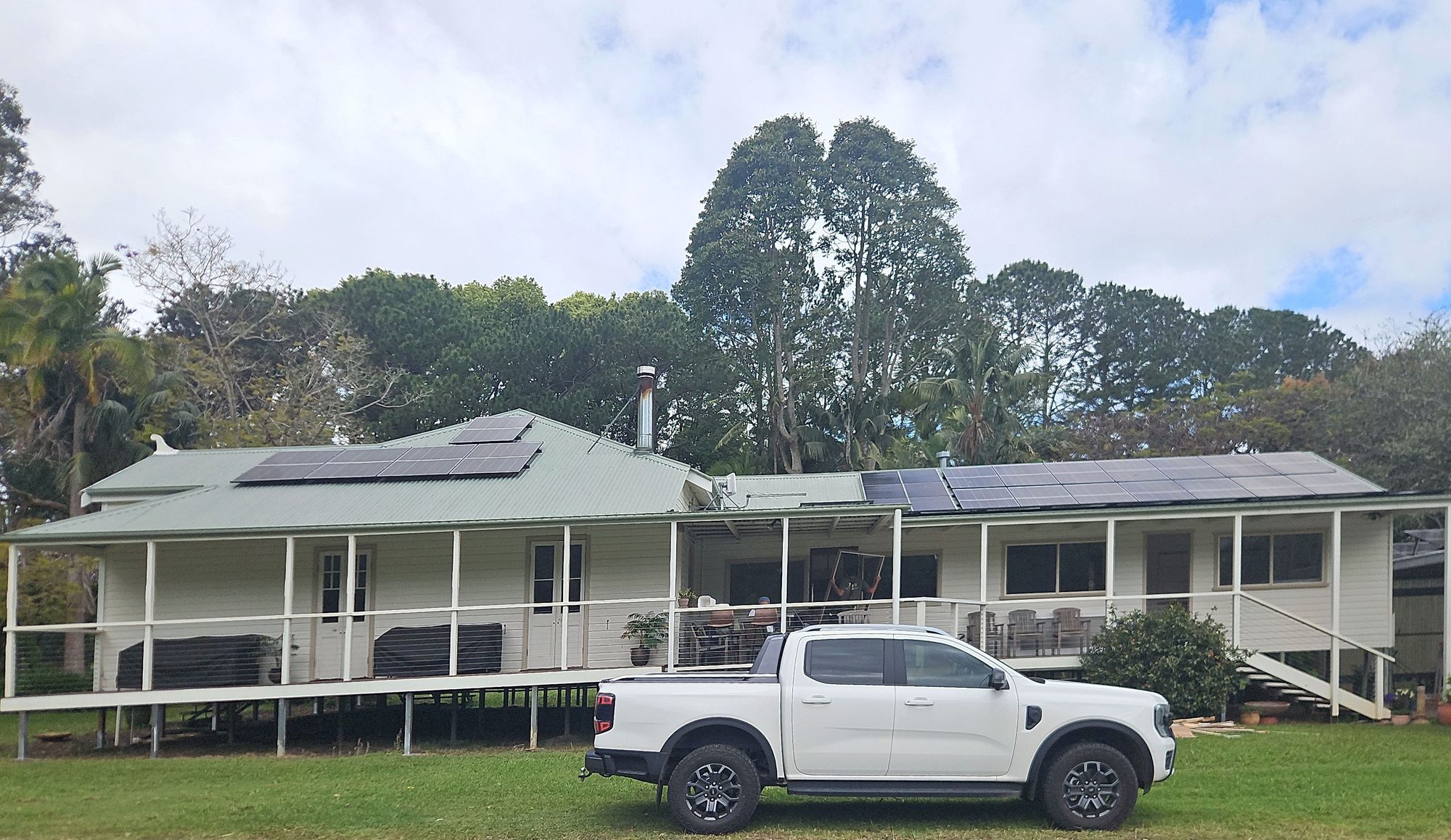
See it on a real job: 20.9 kW Jinko solar and a Sigenergy battery in the Lismore area and 12 kW AIKO solar and a Sigenergy battery in Wilsons Creek.