
6.6 kW Solar System in the Northern Rivers: What You Get, Battery Sizes and Price
Checked and updated by our licensed electricians: October 2026
A 6.6 kW solar system on our Northern Rivers jobs is usually 14 panels of about 475 W (6.65 kW) with a 5 or 6 kW battery-ready hybrid inverter. With Jinko panels it starts from $7,200 after the estimated solar rebate, or $7,900 with AIKO. About two in three of the 6.6 kW systems we have designed since January 2025 also include a home battery.
Get my free energy assessment →
We’ll text you within minutes. Or call 0483 903 020.
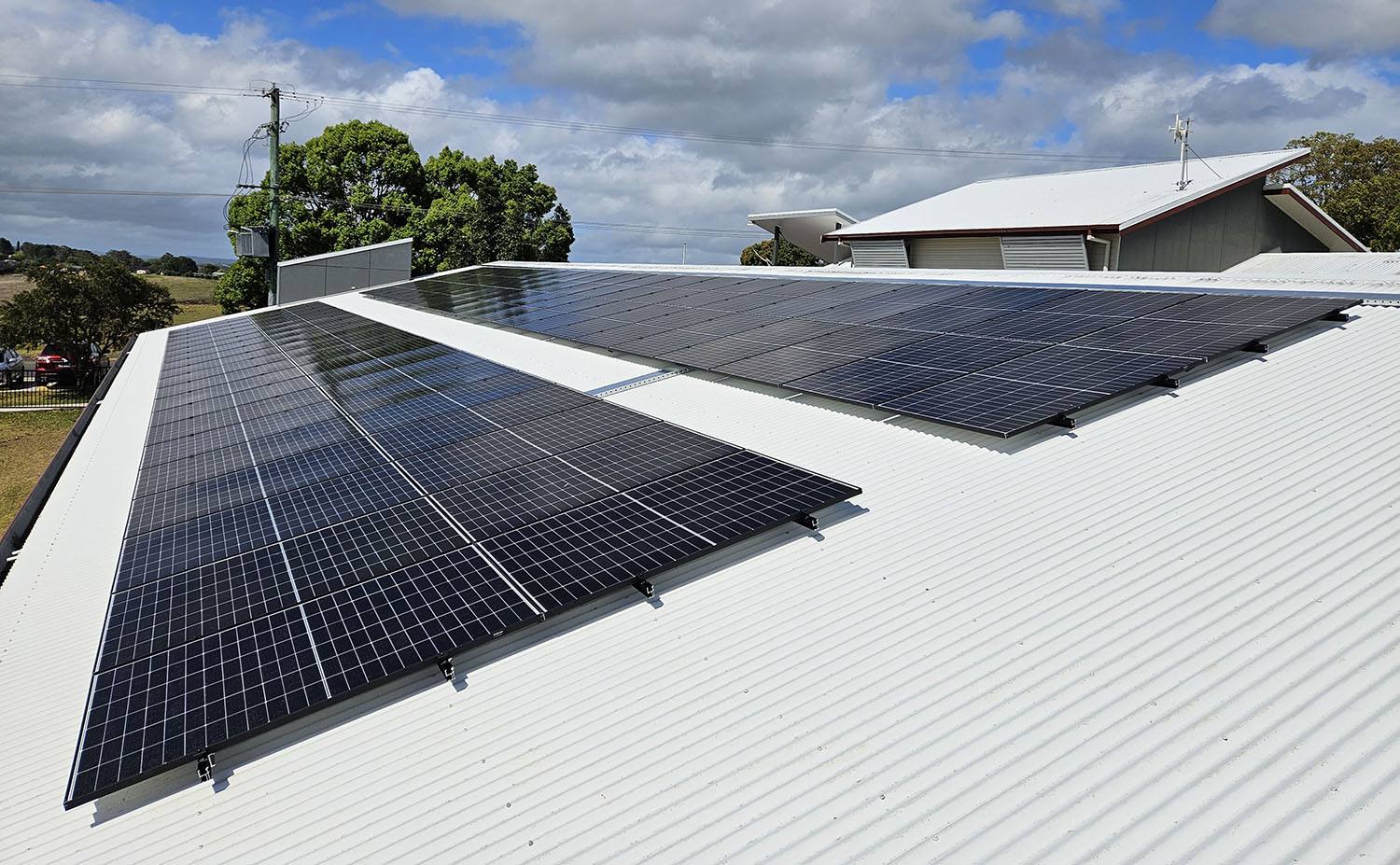
What a 6.6 kW system looks like on our jobs
We looked back over the 81 solar designs of about 6 to 7 kW we have drawn up for homes across 40 Northern Rivers towns and localities since January 2025, from Tyalgum and Pottsville to East Ballina, The Channon and Main Arm. This is what they have in common.
- Panels: 14 panels in more than half of them, usually about 475 W each (6.65 kW). Most of the rest use 15 panels of about 440 W, or 12 to 13 of the newer, larger panels. We use Jinko solar panels (about six in ten designs) and AIKO solar panels (most of the rest).
- Roof space: the Australian Government says a common 6.6 kW system might take 29 to 32 square metres of sunny roof. We check your roof faces, pitch and shading on the design and at the site visit.
- Inverter: most often a 5 or 6 kW hybrid inverter, so a battery can be added now or later. GoodWe ESA designs use its 10 kW all-in-one unit, and some battery designs use a larger Sigenergy inverter.
- Battery: about two in three included one, and about three in four of this year’s designs did.
How much power does a 6.6 kW system make?
The Australian Government says 1 kW of panels typically makes 3.5 to 5 kWh a day averaged over a year in Australia, depending on location, slope and direction, with more in summer and less in winter. On those figures a 6.6 kW system makes roughly 23 to 33 kWh a day on average. That is a general range, not a promise for your roof: your design shows an estimate for your own roof faces and shading. See solar on cloudy and rainy days.
Who a 6.6 kW system suits
The government says average Australian homes use 11 to 23 kWh a day, so your own bill matters more than any average. A 6.6 kW system often suits:
- small to average households, especially if a fair share of your use is during the day;
- smaller roofs, or homes where only one or two roof faces get good sun;
- homes adding a battery now, or planning one later.
If you have a pool, an EV, ducted air conditioning or an all-electric home, you may need more solar. See what a 10 kW solar system looks like on our jobs, or for a bigger home, a 13.2 kW solar system. See how big a solar system do I need? and how to read your power bill. We size every system from 1 or 2 of your recent power bills, not a standard package.
Which battery goes with a 6.6 kW system?
On our 6.6 kW designs the most common battery is two modules: 16 kWh of GoodWe ESA or 18 kWh of Sigenergy. Three modules (24 or 27 kWh) come next, then a single module (8 or 9 kWh) for smaller evening use.
- Sigenergy (premium): 9 kWh modules, so 9, 18, 27, 36 or 45 kWh.
- GoodWe ESA (mid-tier, very high quality): 8 kWh modules, so 8, 16, 24, 32 or 40 kWh.
- We also install Sungrow, Solax and Tesla batteries.
A typical install backs up the whole home in a blackout unless you ask us to leave some circuits out. See what size battery do I need?, blackout backup batteries and home battery prices by size. Already have solar? See adding a battery to existing solar.
6.6 kW solar prices
These are the same typical prices as on our solar system prices by size page, inc GST, after estimated rebates:
- 6.65 kW with Jinko panels: from $7,200 ($8,900 before the solar rebate).
- 6.79 kW with AIKO panels: from $7,900 ($9,600 before).
- 6.6 kW with a 16 kWh GoodWe battery: from $12,500 ($18,200 before rebates); with 24 kWh of GoodWe, from $14,100 ($21,100 before).
- 6.6 kW with an 18 kWh Sigenergy battery and Gateway: from $14,700 ($20,600 before).
Assumptions: a single-storey tin roof, single phase, no switchboard upgrade or extras, installed in 2026. Your final price is confirmed after the site visit. For a range for your own home, try the solar and battery price calculator.
Rebates on a 6.6 kW system
- Solar rebate (STCs): taken off your price at the point of sale, and we do the paperwork. The number of STCs a system creates drops every January. See how solar STCs work.
- Federal battery rebate (Cheaper Home Batteries): if you add a battery, it is also taken off at the point of sale. It steps down on 1 January 2027 and again on 1 July 2027, set by the install date, not the date you sign. See the battery rebate step-down.
- NSW 0% loan: the NSW Home Energy Saver program offers a 0% interest loan of up to $15,000 for solar and batteries, over up to 10 years, with rebates taken off first. See the NSW Home Energy Saver loan FAQ. Loans by Brighte. Eligibility and lender approval apply.
Export limits in the Essential Energy area
Most Northern Rivers homes are on the Essential Energy network. Essential Energy commonly limits how much solar a home can export to 5 kW, sometimes lower, and your connection offer states yours. It limits what you send to the grid, not how much solar you can install for your own use. That is one reason a 6.6 kW array is often paired with a 5 kW inverter, and why a battery helps: solar that cannot be exported can charge it instead. Essential Energy is also bringing in flexible export limits for new and upgraded systems from late 2026, up to 10 kW for single-phase homes, with compatible equipment. We check the limit for your property before we finalise the design. See solar export limits in the Northern Rivers.
How we do it
- A free energy assessment from 1 or 2 recent power bills.
- A custom design sized from your real usage, with the rebates built in.
- A face-to-face site visit before every install: roof, compliant battery position, switchboard and RCBO check, so there are no surprises on the day.
- We handle the grid application, install (usually 1 day) and set up monitoring, then grid connection (typically 1 to 3 weeks later) and a sign-off call.
- Our own in-house team designs every system and does every install. 25 years in solar and large commercial electrical work. No subcontractors.
- SAA-accredited installer, Sigenergy-approved and NETCC accredited.
- Warranties: 25-year workmanship on our installation work, 10-year inverter replacement, 25-year panel performance, 10-year battery.
See it on a real job: 6.65 kW solar and a 9 kWh Sigenergy battery in Mullumbimby and 6.16 kW Jinko solar and a Sigenergy battery in Alstonville. More in our recent installs.
We install across the Northern Rivers, including Mullumbimby, Ballina and Lismore.
Questions we get asked
How many panels is a 6.6 kW solar system?
On our recent Northern Rivers designs, a 6.6 kW system is most often 14 panels of about 475 W (6.65 kW), or 15 panels of about 440 W. The exact count depends on the panel model and your roof.
How much does a 6.6 kW solar system cost?
With Jinko panels, a 6.6 kW system starts from $7,200 after the estimated solar rebate ($8,900 before), or from $7,900 with AIKO panels ($9,600 before). Prices include GST, assume a single-storey tin roof, and the final price is confirmed after the site visit.
What size battery goes with a 6.6 kW solar system?
On our 6.6 kW designs the most common battery is two modules: 16 kWh of GoodWe ESA or 18 kWh of Sigenergy. Three modules (24 or 27 kWh) and single modules (8 or 9 kWh) come next. We size it from your evening and overnight use on your bills.
Is a 6.6 kW solar system enough for my home?
It often suits small to average households. The Australian Government says average homes use 11 to 23 kWh a day, but your own bill matters more. Pools, EVs and all-electric homes often need more solar, so we size from your real usage.
Why is a 6.6 kW system often paired with a 5 kW inverter?
Panels rarely reach their full rated output, so the inverter is often smaller than the panel total. Essential Energy also commonly limits export to 5 kW. It limits what you send to the grid, not the solar you install for your own use.
Will the rebate on a 6.6 kW system go down?
Yes. The solar rebate (STCs) gets smaller every January. If you add a battery, the federal battery rebate steps down on 1 January 2027 and again on 1 July 2027, set by the install date.
Get your 6.6 kW system designed from your bills
Check Your Battery Rebate & 0% Loan
Leave your name and mobile. We’ll text you within minutes to get your rebate and 0% loan worked out.
★★★★★
Rated 5.0 from 60 Google reviews
✓Local electricians, no subcontractors
✓No obligation, takes 30 seconds
✓25-year workmanship warranty
Sources
Last checked 20 October 2026. Our design figures come from our own design software (81 designs of 6 to 7 kW for Northern Rivers homes, January 2025 to October 2026). Everything else comes from the government’s or the network’s own documents.
- energy.gov.au: Size your solar system
- energy.gov.au: Solar panels
- Essential Energy: Small Scale Solar Connections customer summary
- Essential Energy: Flexible export limits fact sheet
- NSW Government: Home Energy Saver program
More from Sun Connect Solar
- Solar system prices by size
- Home battery prices by size
- Residential solar systems
- Sigenergy vs GoodWe vs Tesla
Prices are for typical systems and include GST. Rebates are estimated and depend on your system and install date. Final price confirmed after the site visit.