
Get a free on-site commercial assessment
Solar and batteries for Northern Rivers businesses, up to 1 MW. Commercial finance through Solaris Finance.
Checked and updated by our licensed electricians: October 2026
There are specific rules about where a home battery can go, covering the wall it hangs on and the distance from habitable spaces, doors and windows. We check the position at the free site visit before any install, so the battery goes somewhere compliant and sensible.
Get my free energy assessment →
We’ll text you within minutes. Or call 0483 903 020.
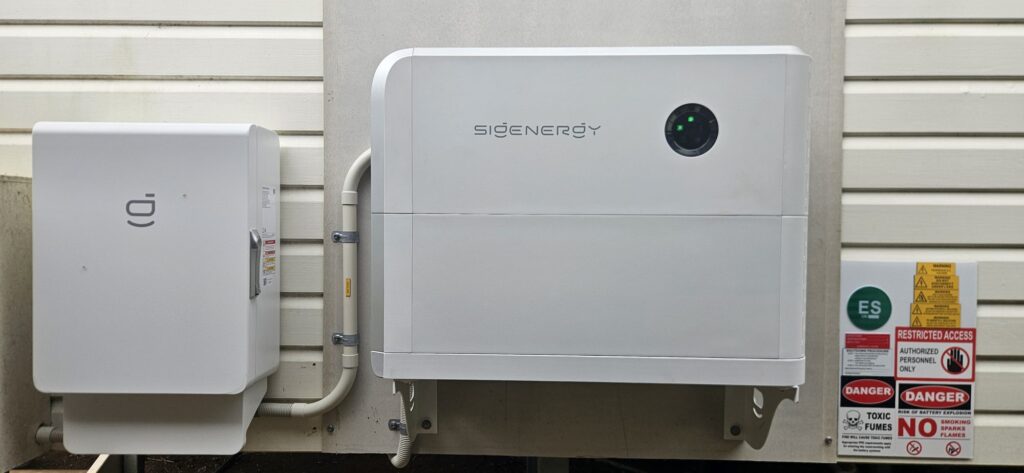
The Australian Government says there are specific rules about where a battery can be installed, including restrictions on the wall material it is attached to and minimum distances from habitable spaces, doors and windows. The main rules come from the Australian standard for home battery installs, AS/NZS 5139, set out below. Your battery maker’s manual and your building can add more, so we confirm the exact spot on site.
Want a quick steer on battery size first? The 60-second which home battery is right for me quiz works from your solar, power bill and backup needs and suggests a likely size range in real module steps.
AS/NZS 5139:2019 is the Australian and New Zealand standard for the safe installation of battery systems used with inverters and other power conversion equipment, including home batteries. It sets where a battery can and can’t go, and what has to be kept away from it. The summary below follows the guidance that Australia’s electrical safety regulators publish together through the Electrical Regulatory Authorities Council (ERAC).
A home battery must not be installed:
Other rules around the battery: appliances that are not part of the battery system, such as hot water systems and air-conditioners, must sit at least 600 mm to the side of the battery and 900 mm above it (the solar inverter that charges it is allowed). If the battery is on, or within 300 mm of, a wall with a habitable room on the other side, a non-combustible barrier is needed behind it, such as brick, concrete, compressed cement sheet or tiles. Plasterboard and timber don’t count. The maker’s own manual can add more rules, such as distance from the coast.
What this means at your home: a garage wall or an outside wall clear of doors, windows and paths often works. Every location is checked against these rules on our site visit before install day, so there are no surprises on the day.
If a battery position is not compliant, the install can stop on the day or cost more to relocate. That is why we visit first: no hidden surprises or extra costs on install day.
Your installer must also be licensed and accredited for battery work. We are SAA-accredited and a fully licensed NSW electrical contractor.
Near the beach? Most battery makers set rules for homes within about 500 m of the coastline: see solar and batteries near the coast.
For weather questions, see our guide to battery IP ratings, storms and floods.
Placement is one chapter of our Northern Rivers home battery buyer’s guide, which also covers sizing, brands, the rebate dates, backup and quotes.
AS/NZS 5139:2019 is the Australian and New Zealand standard for the safe installation of battery systems used with inverters, including home batteries. It sets where a battery can and can’t be installed, the clearances around it, and when a fire barrier is needed behind it. Licensed electricians install home batteries to it.
Not in a habitable room such as a bedroom, living room, kitchen or study, and not in a hallway or escape route, a ceiling space or a wall cavity. A garage or an outside wall is usually where it goes. We check the exact spot against AS/NZS 5139 and the maker’s manual on the site visit.
Possibly, if the position meets the rules and the manufacturer’s requirements. We confirm on the site visit.
Many batteries are designed for outdoor installation. Check the model’s rating and manufacturer instructions; see our IP rating guide.
No. The Australian Government notes restrictions on the wall material. We check it.
Yes, it is a face-to-face visit so we can agree the position with you.
Last checked 20 October 2026. Only the manufacturer’s, the network’s or the government’s own documents are used; app menus and defaults change between models and versions, so if your screen looks different, call us rather than guess.
Related guides: battery fan noise or warm to the touch · what happens on install day
For a new build, the battery wall is planned on the drawings: our BASIX, solar and battery guide for new homes lists what to ask the builder for.
Start with the free tools (no details needed to see a result): solar and battery price calculator, is my solar battery-ready? checker or the 60-second battery quiz.
See all the free calculatorsBook a free 15-minute chat
The chat is with our head electrician, about your power bills and what you want from a system. No obligation and no sales script; the firm price comes after we have seen your bills and your home.
See it on a real job: 20.9 kW Jinko solar and a Sigenergy battery in the Lismore area, 8.4 kW Jinko solar and a 24 kWh Sigenergy battery in Ocean Shores and a 54 kWh Sigenergy battery in its own shed in the Mullumbimby hinterland.

Sun Connect Solar: local solar and battery installers based near Mullumbimby, serving the Northern Rivers NSW. SAA-accredited installer. NSW electrical contractor licence 343044C. Our own electricians, no subcontractors.
Accredited and approved:




© 2026 Sun Connect Solar.