
Get a free on-site commercial assessment
Solar and batteries for Northern Rivers businesses, up to 1 MW. Commercial finance through Solaris Finance.
Checked and updated by our licensed electricians: November 2026
Short answer: For most Northern Rivers homes, solar should be sized from your power bills and your roof, with quality panels, an inverter that can take a battery now or later, and an SAA-accredited installer who handles the Essential Energy connection and your export limit. Many homes we design land somewhere between 6.6 kW and 13 kW. We install AIKO and Jinko panels with Sigenergy, GoodWe and other inverters, and our own electricians check your roof, shading and switchboard in person before install day.
Get my free energy assessment →
We’ll text you within minutes. Or call 0483 903 020.
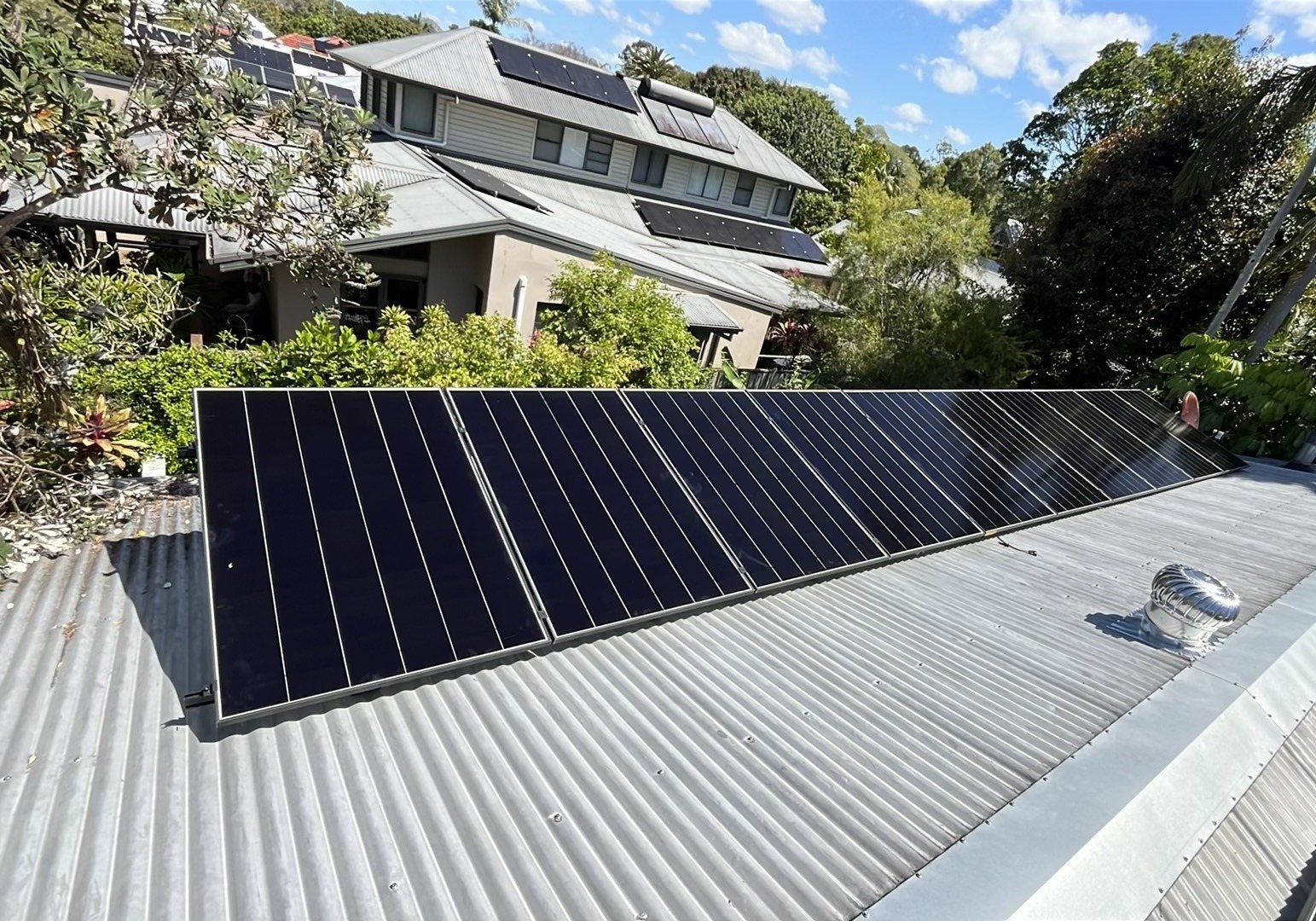
Start with your power bills, not a package. Look at how much you use in a day, when you use it (daytime or evening) and whether you plan to add a battery, an EV or a pool pump. Roof space, shading and your Essential Energy export limit then set the practical size. Our guide to how big a solar system you need walks through it, and these pages show common sizes: 6.6 kW, 10 kW and 13.2 kW. Not sure how to read your bill? See how to read your power bill.
The panel brand matters less than people think, as long as it is a reputable maker with an Australian office and a long performance warranty. What matters more is the right number of panels on the right roof faces, installed properly. We install two brands we trust: AIKO (high-efficiency, all-black, good when roof space is tight) and Jinko (proven and great value). Our AIKO vs Jinko comparison explains when we would pick each.
The inverter turns the panels’ power into power your home can use. If you might want a battery in the next few years, a hybrid inverter (one that can run a battery) usually makes sense now. We install Sigenergy and GoodWe hybrid systems, plus Sungrow, SolaX and Tesla. Rural homes with three-phase power need a three-phase inverter: see single-phase vs three-phase.
Essential Energy runs the network across the Northern Rivers and sets how much power your system can send back to the grid. Your installer should apply for the connection, tell you your likely export limit and set the inverter to match. See solar export limits in the Northern Rivers.
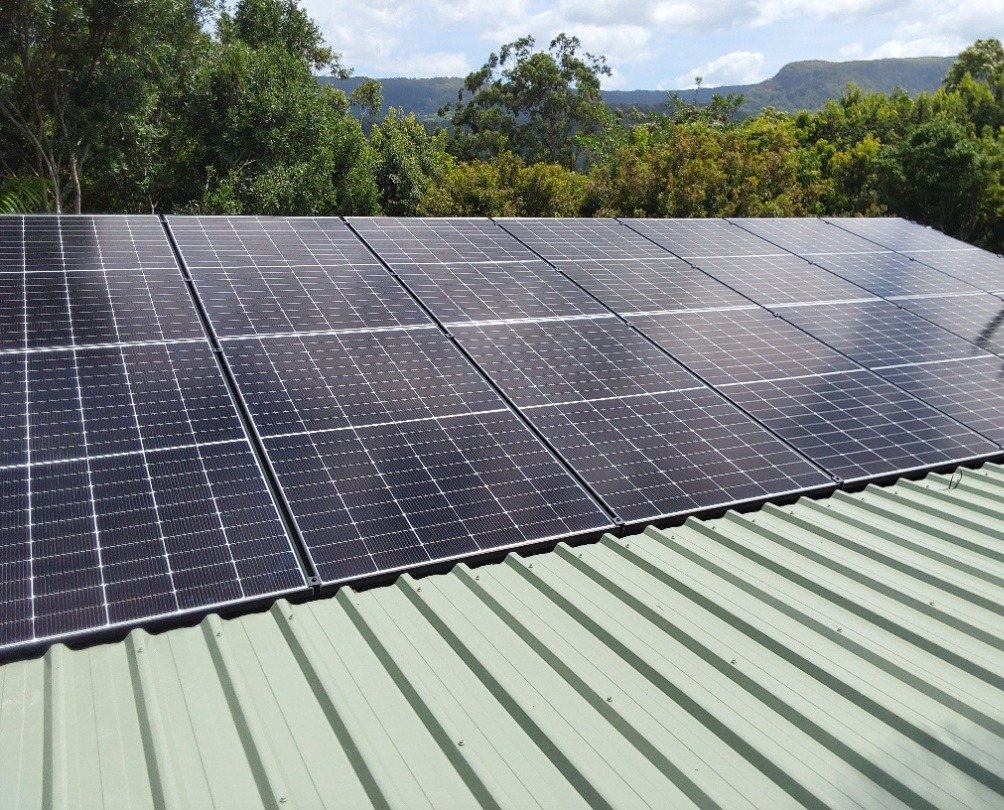
Solar systems get small-scale technology certificates (STCs), taken off the price at the point of sale. STCs step down every January, so the same system gets a little less each year. Batteries have their own federal rebate: see Cheaper Home Batteries: who qualifies. We build the rebates into every design and handle the paperwork. Check yours with the battery rebate calculator.
Many of our customers add a battery with their solar so they use their own power in the evening. Others start with solar and a battery-ready inverter, then add one later. Our Northern Rivers home battery buyer’s guide and is a home battery worth it? help you decide.
The installer matters as much as the equipment. Read how to choose a solar installer in the Northern Rivers, and check any company with how to check an installer’s accreditation and licence.
A site visit before install day, the grid application, an install that usually takes about a day, then the switch-on once the grid connection is approved. See how it works and what happens on install day.
Our own electricians install solar and batteries across the Northern Rivers, from our workshop at Wilsons Creek near Mullumbimby: Tweed Heads, Kingscliff, Banora Point, Bilambil Heights, Pottsville, Murwillumbah, Mullumbimby, Ocean Shores, Brunswick Heads, Byron Bay, Suffolk Park, Bangalow, Lennox Head, Ballina, Alstonville and Wollongbar, Lismore, Goonellabah, Coraki and Woodburn, Evans Head. See all areas we serve or the Northern Rivers solar and battery installation page.
It depends on your power bills, roof and plans for a battery or EV. Many homes we design land somewhere between 6.6 kW and 13 kW, but the right size comes from your own usage, your roof space and your Essential Energy export limit.
Any reputable brand with an Australian office and a long performance warranty, installed properly on the right roof faces. We install AIKO and Jinko panels. AIKO suits tight roofs because it is very efficient; Jinko is proven and great value.
Yes. Panels produce less on cloudy and rainy days but still produce, and the yearly output in the Northern Rivers makes solar well worth it for most homes.
Usually yes. Panel makers allow installs near the coast with the right frames and parts, but some batteries must be at least 500 m from the coast or need the maker’s written approval. We check the maker’s rules for your address at design time.
Sun Connect Solar’s own SAA-accredited electricians install solar panels and batteries across the Northern Rivers, from Tweed Heads to Evans Head and west to Lismore, with no subcontractors.
Many of our customers do, so they use their own solar power in the evening and have backup in a blackout. If not now, choose a battery-ready hybrid inverter so a battery can be added later.
Yes. As well as our Google reviews, homeowners have reviewed us on SolarQuotes, where we’re rated 4.9 from 22 reviews.
Last checked 5 November 2026. Written in our own words from the sources below and our own install experience.
Author: our director, in-house head electrician and energy expert, in the trade since 1987.
Start with the free tools (no details needed to see a result): solar and battery price calculator, is my solar battery-ready? checker or the 60-second battery quiz.
See all the free calculatorsBook a free 15-minute chat
The chat is with our head electrician, about your power bills and what you want from a system. No obligation and no sales script; the firm price comes after we have seen your bills and your home.

Sun Connect Solar: local solar and battery installers based near Mullumbimby, serving the Northern Rivers NSW. SAA-accredited installer. NSW electrical contractor licence 343044C. Our own electricians, no subcontractors.
Accredited and approved:




© 2026 Sun Connect Solar.