
Off-grid solar or grid-connected with a battery: which is right for you?
Checked and updated by our licensed electricians: October 2026
For most households, keeping the grid connection and adding a battery is the better fit. The Australian Government says grid-connected is the most cost-effective set-up for most properties, and that off-grid systems have much higher upfront costs but can be cheaper and more reliable where the grid is unavailable, unreliable or very expensive to connect. We will tell you honestly which one suits your property.
Get my free energy assessment →
We’ll text you within minutes. Or call 0483 903 020.
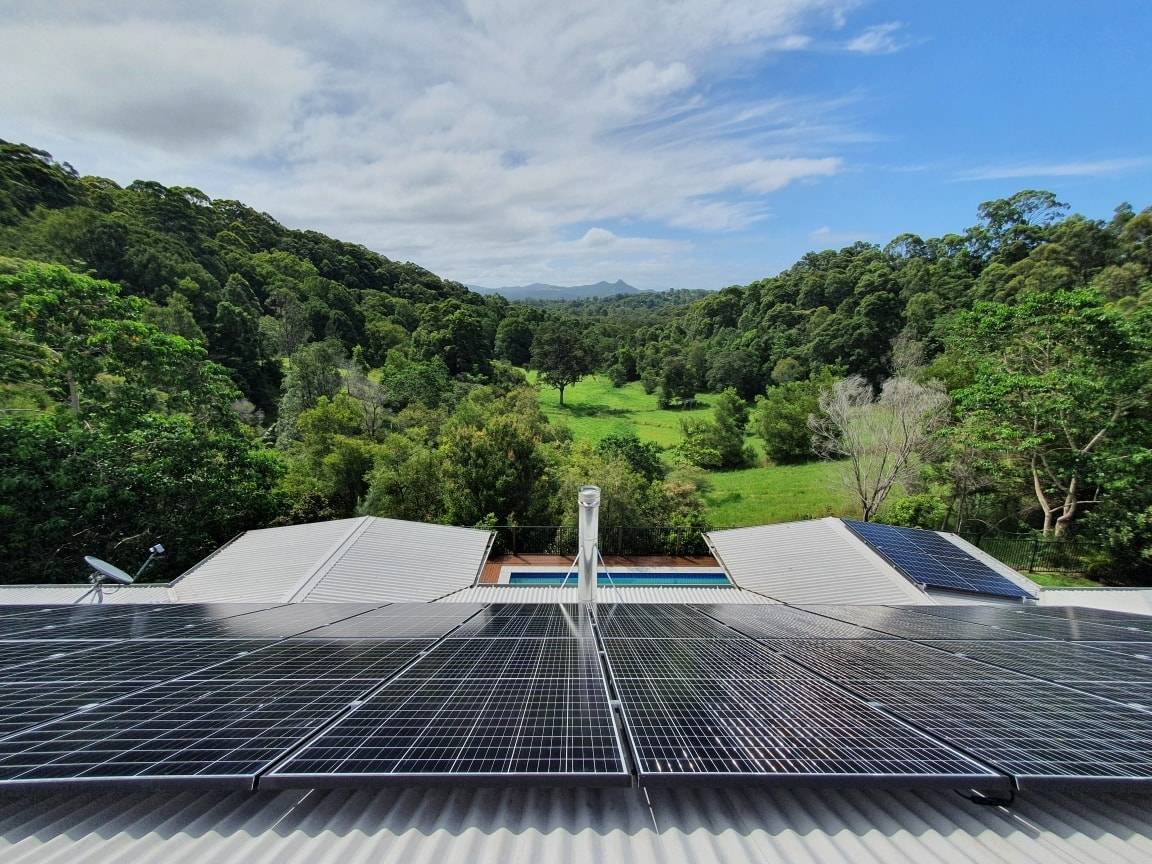
The two options
- Grid-connected with a battery: you still buy and sell power through the grid. A battery stores spare solar, and if it is set up for backup it keeps the home running in a blackout.
- Off-grid: no grid connection at all. A large battery, a control system and often a generator keep you supplied, and there are no electricity bills.
What the Australian Government says
- Most rooftop solar systems in Australia, even with a battery, are grid-connected. This is the most cost-effective set-up for most properties.
- Off-grid systems are completely self-sufficient and need a large battery and a control system, and often have a backup generator.
- There are no electricity bills off-grid, but the upfront costs are much higher.
- Where connection is unavailable, unreliable or very expensive, off-grid might be cheaper and more reliable than mains power. For most households and businesses it makes sense to keep a grid connection.
When each tends to suit
| Situation | Often a better fit |
|---|---|
| Grid is on the street, outages happen sometimes | Grid-connected with a blackout-backup battery |
| Long, costly or impractical grid connection to a hinterland block | Off-grid |
| You want to cut power bills and keep lights on in storms | Grid-connected with a battery |
| Cabin, shed or workshop away from the house | Off-grid, sized for that site |
The middle path: an islandable battery
The government explains that an ‘islandable’ solar and battery system disconnects from the grid in an outage and keeps powering your home, with solar recharging the battery when it is sunny. See blackout backup batteries and whole-home vs essential circuits.
Already off-grid and thinking of connecting, or the other way round? Start with a free energy assessment: we look at your property, your loads and your options. More: how off-grid solar works, off-grid solar in the Northern Rivers and approvals and checks.
Why locals choose us
- Our own in-house team designs every system and does every install. 25 years in solar and large commercial electrical work. No subcontractors.
- A face-to-face site visit before every install: compliant battery position, switchboard and RCBO check, no surprises on the day.
- SAA-accredited installer and Sigenergy-approved, with a 25-year workmanship warranty on our installation work.
Questions we get asked
Is off-grid solar cheaper than being on the grid?
Usually not at the start. The government says upfront costs are much higher off-grid, and that for most homes keeping the connection makes sense. It can be cheaper where the connection would be unavailable or very expensive.
Can a grid-connected battery power my house in a blackout?
Yes, if it is configured for backup. Not every battery system can do this.
Can I go off-grid later?
Sometimes. We design systems with headroom, but going fully off-grid usually needs a bigger battery and a proper review of your loads.
Which do your customers choose?
It depends on the property. Where there is a practical grid connection, most choose a grid-connected battery with blackout backup; properties without one choose off-grid.
Sources
Last checked 7 October 2026. Only the manufacturer’s, the network’s or the government’s own documents are used; app menus and defaults change between models and versions, so if your screen looks different, call us rather than guess.
- energy.gov.au: Design considerations (grid-connected or off-grid, backup, roof, monitoring)
- energy.gov.au (Australian Government): Batteries, including the Cheaper Home Batteries Program, backup power, installation rules, warranties and VPPs