
How does off-grid solar work, and what is in an off-grid system?
Checked and updated by our licensed electricians: October 2026
An off-grid system makes, stores and supplies all of a property’s electricity with no connection to the grid. The Australian Government describes these systems as completely self-sufficient: they need a large battery and a control system, and often a backup diesel or petrol generator for long cloudy periods. Designing one takes specific expertise, so here is how it works and what goes in.
Get my free energy assessment →
We’ll text you within minutes. Or call 0483 903 020.
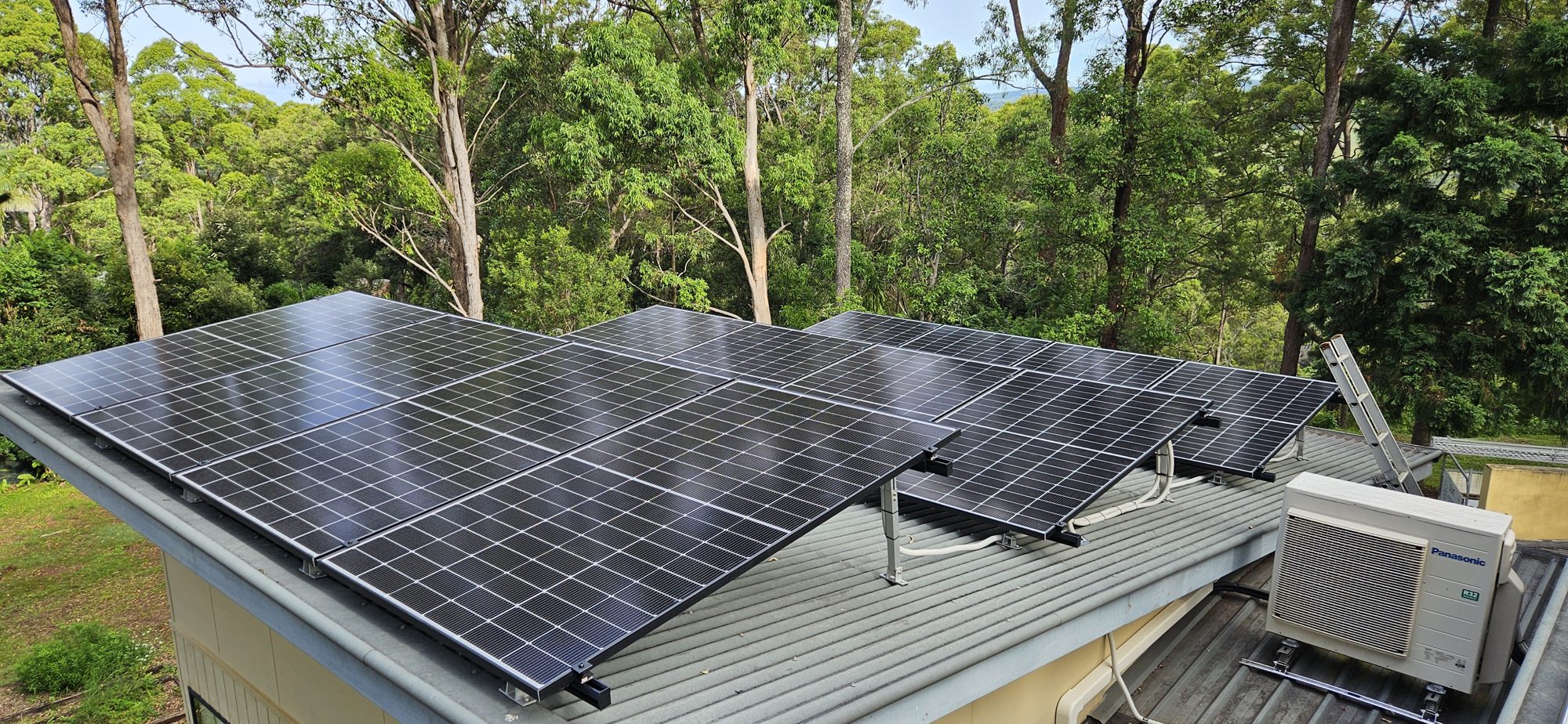
The parts of an off-grid system
- Solar panels: they make power in daylight. Off-grid arrays are usually sized for the shortest, greyest days of the year, not the average.
- A battery bank: stores the day’s solar for the evening, night and wet days. It is large, because there is no grid to fall back on.
- Inverter and controls: turn stored and solar power into household power and decide what charges and what runs.
- A backup generator (often): the government notes off-grid systems often include a diesel or petrol generator for long cloudy periods. Some battery systems are designed to work with one: Sigenergy’s manual describes a diesel generator working with its Gateway to give a smooth transition between solar, storage and generator power for long-term off-grid use.
- Monitoring: an app so you can see charge, generation and loads and catch problems early.
How we size it
We start with what you actually run: fridges, pumps, tools, air-conditioning, workshop, and future plans. Then we size the panels and battery so you get through winter and a run of wet weeks, and decide whether a generator makes sense. The battery size question has its own guide: how many days of autonomy do I need?
What to expect day to day
- Power is plentiful on sunny days, so heavy loads (washing, pumps, welders) are best run in the middle of the day.
- Wet weeks need care: a battery cannot make power on a long grey stretch.
- Without a grid there is no feed-in credit and no grid backup, so the generator and your habits matter.
Not sure you need to be fully off-grid? A grid-connected battery that keeps your home running in a blackout is often the better fit: see off-grid or grid-connected with a battery. Checks before you build: approvals and what to check in NSW.
More on our off-grid work: off-grid solar in the Northern Rivers and sizing an off-grid battery: days of autonomy.
Why locals choose us
- Our own in-house team designs every system and does every install. 25 years in solar and large commercial electrical work. No subcontractors.
- A face-to-face site visit before every install: compliant battery position, switchboard and RCBO check, no surprises on the day.
- SAA-accredited installer and Sigenergy-approved, with a 25-year workmanship warranty on our installation work.
Questions we get asked
Does off-grid solar work in wet weather?
Panels still make some power in cloud, but much less. That is why off-grid systems are sized for winter and wet weeks, and often paired with a generator.
Do I need a generator?
Not always, but the Australian Government notes off-grid systems often have one for long cloudy periods. We decide with you from your loads and how much risk you accept.
Can I run a whole house off-grid?
Yes, if the system is sized for your loads. Large loads and starting currents need to be designed for, so tell us everything you run.
Who designs and installs off-grid systems?
Designing an off-grid system needs specific expertise. Ours are designed by our own team and installed by our own electricians.
Sources
Last checked 7 October 2026. Only the manufacturer’s, the network’s or the government’s own documents are used; app menus and defaults change between models and versions, so if your screen looks different, call us rather than guess.
- energy.gov.au: Design considerations (grid-connected or off-grid, backup, roof, monitoring)
- Sigenergy’s official SigenStor Home User Manual, Single-phase (Version 04): backup networking, Gateway, installation position, operating temperature, working modes
More from Sun Connect Solar
- Case study: off-grid solar, Sigenergy battery and generator in the Mullumbimby hinterland
- Off-grid solar and battery systems in the Northern Rivers
- Off-grid or grid-connected with a battery?
- Off-grid approvals: what to check in NSW
- Off-grid battery size: days of autonomy
- What size battery do I need?