Solar and Batteries for Warehouses and Workshops, Northern Rivers
Short answer. Sheds and workshops have big roofs and heavy daytime use, so they suit solar. Peak demand is a separate matter: solar lowers your energy charges but does not reliably lower demand charges, and a battery only helps where peaks are short and predictable. We check your interval data and tariff first.
★★★★★ Rated 5.0 from 57 Google reviews · read them on Google · read them on our reviews page
Warehouses, workshops, depots and light-industrial sheds have large flat or low-pitch roofs and heavy daytime use, so they are some of the best candidates for commercial solar. They are also where peak demand and three-phase design matter most.
Why sheds suit solar
- Roof area. Big metal roofs with few obstructions make for simple, tidy arrays.
- Daytime operation. Compressors, welders, machinery, lighting and chillers run in working hours, when the sun is up.
- Weekends. If you close on Saturdays and Sundays, that solar still has to go somewhere, so we look at weekend load and export limits when we size the system.
Three-phase design
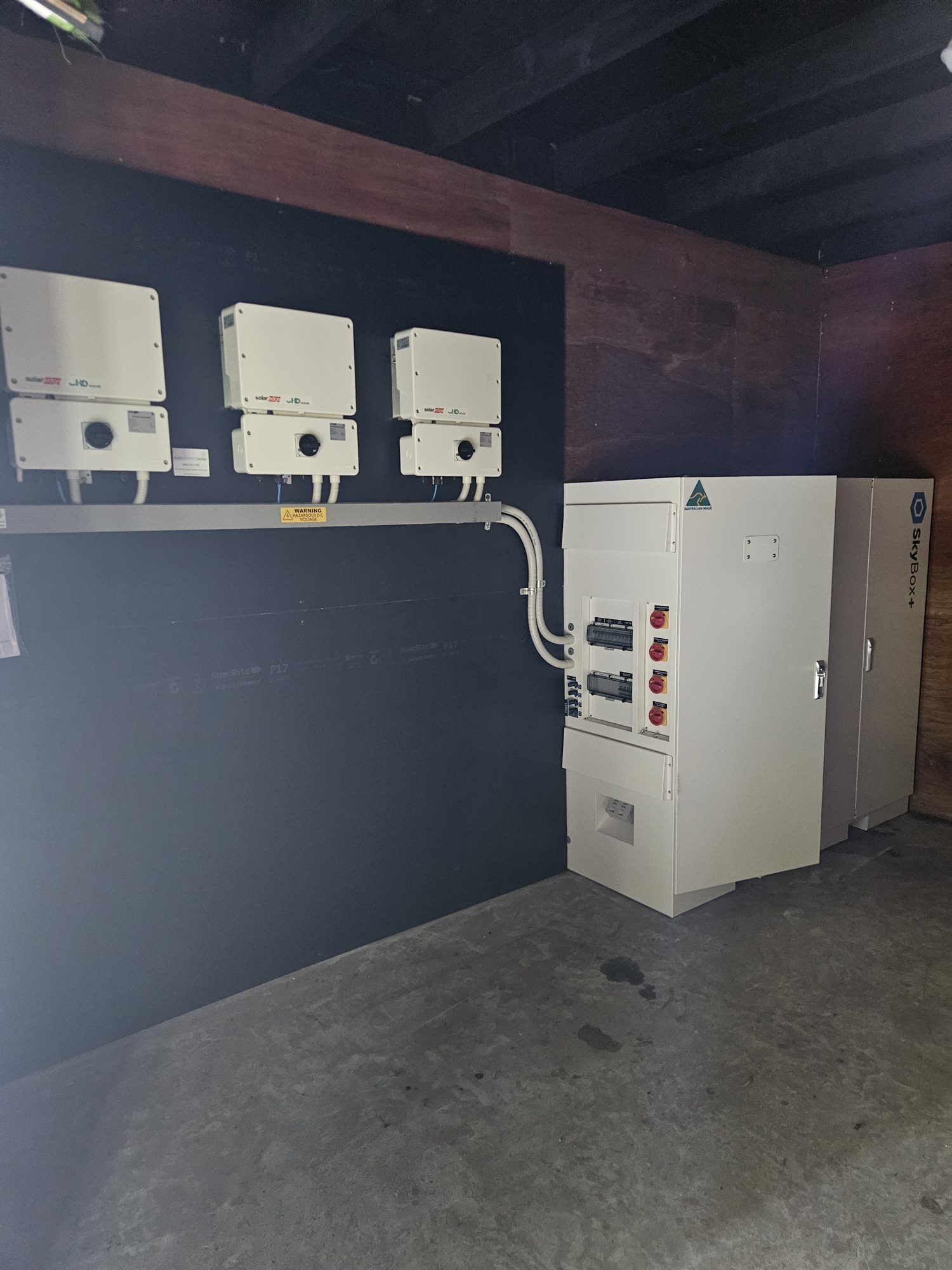
Most workshops and warehouses run on three-phase, and our background is 25 years in solar and large commercial electrical work, so three-phase boards are routine for us. We check the board, the main switch and the supply capacity on the site visit. A three-phase supply lets us choose a three-phase inverter, or several inverters balanced across the phases. See single-phase vs three-phase.
Peak demand and demand charges, honestly
Many commercial tariffs have two parts: a charge for the energy you use (kWh), and a charge for your highest demand in the period (kW or kVA). The demand part is set by a short burst of high draw, for example every machine starting at 7am.
- Solar reduces energy charges by supplying power during the day.
- Solar does not reliably reduce demand charges. A cloudy half-hour that coincides with your peak sets the charge just the same.
- A battery can shave peaks if it is sized and programmed for them and the peaks are short and predictable. If your peaks are long, a battery would have to be very large, and it may not be worth it.
- Staggering the starts of big motors can reduce peaks without any new equipment at all. We tell you if that is the better answer.
The way to know is data. We use your half-hourly interval data and your tariff, and we tell you whether a battery earns its place. We do not state savings figures, because they depend on your tariff and your operation.
Roof, switchboard and connection
- Roof. Type, age, fixings, skylights, ridge vents and plant are all checked, and if a roof needs attention first, we say so.
- Switchboard and protection. Commercial boards vary in age and capacity. We check yours and tell you what is needed. See switchboard upgrades and RCBOs.
- Network approval. Larger systems involve more assessment by Essential Energy and may have export limits. See solar export limits.
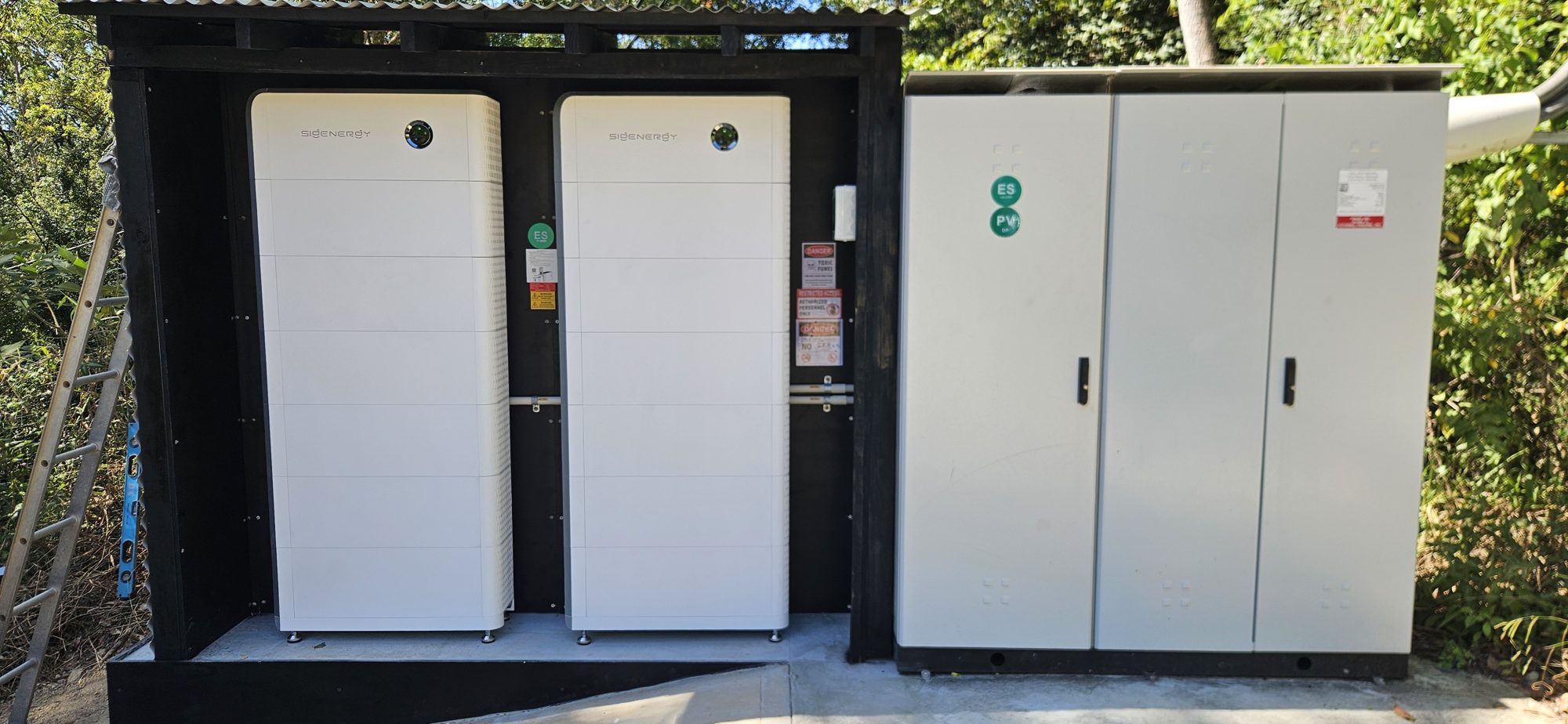
- Backup. If part of your site must keep running, such as refrigeration, security and tills, we can design backup for those circuits. We install Sigenergy and GoodWe systems, along with Sungrow, Solax and Tesla.
Fleet and staff charging
Depots with electric vans or staff cars can charge from the solar by day. See commercial EV chargers.
Our commercial service area is the Northern Rivers, from Tweed Heads south to Evans Head and west to Lismore, and it includes Casino. See the areas we service.
Finance and rebates
Business finance for commercial systems is arranged through our finance partner, Solaris Finance. The NSW household 0% loan is for homes and does not apply to businesses. Rebates depend on system size: small-scale systems up to 100 kW can earn STCs, taken off at point of sale. The Clean Energy Regulator has announced that the scheme is to be extended to systems from 100 kW up to 1 MW, for mid-scale solar installed from 1 October 2026, subject to regulations being in place, so we confirm the position for your size when we design it. Ask your accountant how solar is treated for your business tax. We provide the paperwork they need.
How we handle it on our jobs
- Free on-site assessment first. For commercial sites, including Casino, we start with a visit to your site, with your power bills or interval data in hand.
- Design from your data. Our own in-house electricians size the system from when you actually use power. Our background is 25 years in solar and large commercial electrical work.
- Approvals. We prepare and submit the Essential Energy application and deal with any export limits.
- Install around your trade. No subcontractors, and the work is planned around your trading hours. Then monitoring set-up and a sign-off call.
We design commercial systems up to 1 MW, and our 25-year workmanship warranty applies to our installation work on commercial jobs too. Equipment is covered by the manufacturers’ warranties.
Questions we get asked
What is peak demand and why does it matter?
Some business tariffs charge not just for the energy you use, but for your highest short-term power draw in a month. One brief spike can set the charge. Solar alone does not always reduce it, because a cloudy moment can coincide with your peak.
Can a battery reduce demand charges?
On some tariffs, yes, when the peaks are short and predictable and the battery is sized for them. It is not automatic and does not suit every site. We read your interval data and tariff and tell you honestly if it makes sense.
Do I need three-phase solar for a workshop?
If your site has a three-phase supply and three-phase equipment, a three-phase system is normally the right design. We confirm on the site visit.
Can the roof of my warehouse take solar?
Often, yes. We check the roof’s type, age and condition, fixings, shading, skylights and plant. Where a roof needs repairs first, we say so.
How big a system can you design?
Up to 1 MW. We start with a free on-site assessment.
Sources
Last checked 6 October 2026. The extension of STCs to systems from 100 kW to 1 MW is described by the Regulator as an intention subject to regulations, so we confirm what applies when we design.
- Clean Energy Regulator, Small-scale renewable energy scheme
- Clean Energy Regulator, SRES solar PV eligibility expansion, 100 kW to 1 MW (announced August 2026)
- Essential Energy, Small Scale Solar Connections customer summary
- Essential Energy, Solar and other small generators
Related pages
- Commercial solar for Northern Rivers businesses
- Commercial EV chargers
- Single-phase vs three-phase
- Solar export limits
- Switchboard upgrades and RCBOs
- Sigenergy batteries
Related guides: how commercial solar works and whether it is worth it
Talk to us
Book a free on-site assessment · Leave your details → · 0483 903 020 (Mon-Fri 7am-6pm, Sat 7am-4pm) We’ll text you within minutes.
Find us on Google Maps to read our reviews, or follow our installs on Facebook and Instagram.