
Get a free on-site commercial assessment
Solar and batteries for Northern Rivers businesses, up to 1 MW. Commercial finance through Solaris Finance.
Short answer. Whole home backup means that when the grid goes down, your battery and solar keep every circuit in the house running, not just a few chosen ones. A typical Sun Connect Solar install gives full home backup, running all circuits, unless you ask us to leave some out, such as an EV charger.
What limits it is the inverter’s output (how much you can run at once) and the energy stored in the battery (how long it lasts). The other option, essential-circuits backup, powers only the circuits you choose.
★★★★★ Rated 5.0 from 66 Google reviews · read them on Google · read them on our reviews page
“Backup” can mean two quite different things, and it is worth settling which one you want before you choose a battery. Here is how each works, what stays on, and what we normally do.
Want a quick steer on battery size first? The 60-second which home battery is right for me quiz works from your solar, power bill and backup needs and suggests a likely size range in real module steps.
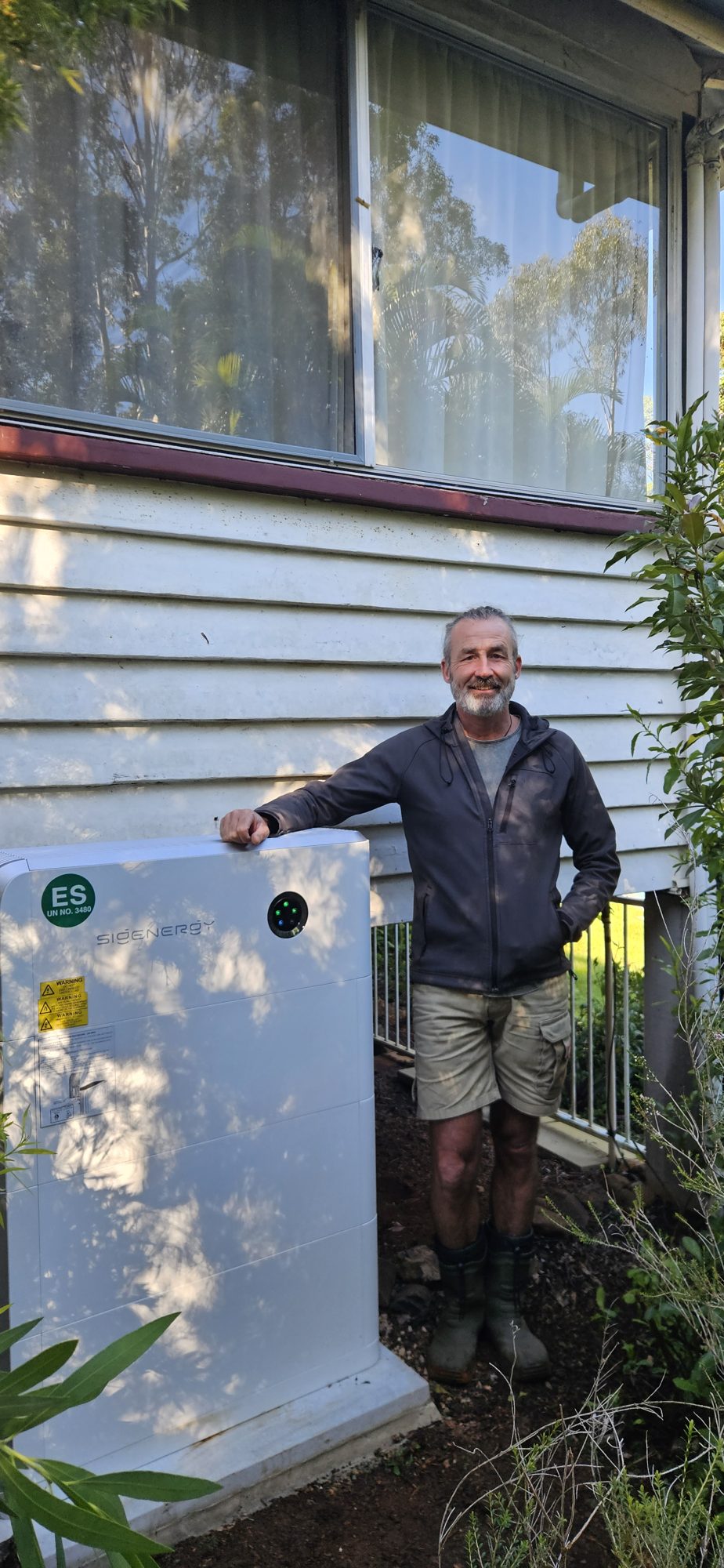
With whole-home backup, when the grid fails, the system disconnects from the grid and powers your whole switchboard from the battery and solar. Every circuit that was working a minute ago keeps working, within the limits of the inverter’s output and the battery’s stored energy. It is the simplest to live with, because you do not have to remember which socket is on a backed-up circuit.
This is what a typical Sun Connect Solar install gives you. We run all circuits unless you ask us to leave some out, such as an EV charger.
With essential-circuits (partial) backup, only chosen circuits are connected to the backup output, normally lights, the fridge, internet and a few power points. Everything else goes off in a blackout. This can be done with a separate backup board, or by moving some circuits across, and it adds electrical work at install.
Essential-circuits backup can suit you if:
A backup system has a device that decides when the grid is gone. In most home batteries this is a gateway or an automatic transfer arrangement. When it senses the grid is lost, it opens the connection to the grid so your system does not feed power into a dead line, which protects network workers. Then it powers your home from the battery. When the grid returns, it reconnects and carries on. Sigenergy uses a gateway for this, and GoodWe’s ESA has its own backup output. The manufacturers publish their own switching times, so we do not repeat figures here.
We do not promise how many hours your home will run, because it depends on the season, the weather and what you use. We explain what is realistic for your set-up.
Help guides for owners: check your Sigenergy backup is working and why a battery did not switch over in a blackout. For the full picture, see blackout backup batteries for Northern Rivers homes and what size battery you need.
Work it out for your own list of appliances: our blackout battery runtime calculator shows how long a Sigenergy or GoodWe battery would run them, with and without sun.
It can. A typical Sun Connect Solar install gives full home backup, running all circuits, unless you ask us to leave some out, such as an EV charger. How long it runs depends on the battery size and what you use.
That depends on the inverter’s output and the battery’s stored energy. Big loads draw a lot and drain a battery fast. We talk through your biggest loads on the site visit and set it up the way you want, with a clear idea of how long it will last.
Switchover is quick, and lights and most appliances carry on or restart in moments. It is not guaranteed to be seamless for every device, so a computer with no UPS or a clock may still reset. We do not promise zero interruption.
Common reasons are an EV charger, a pool pump, an electric hot water element or a workshop with large motors. Leaving them off saves the battery for the things you want during an outage.
See our guide on why a battery may not have switched over in a blackout. If we installed it, call us on 0483 903 020 and we work through it with you.
No. With whole home backup you stay connected to the grid: in a blackout the system disconnects from the grid and runs your home from the battery and solar, then reconnects when the grid comes back. An off-grid home has no grid connection at all, so the system has to cover every day of the year on its own. More in off-grid or grid-connected with a battery.
If a generator is also in the picture, the generator vs home battery guide explains how a battery and a generator work together through a long outage.
Start with the free tools (no details needed to see a result): solar and battery price calculator, is my solar battery-ready? checker or the 60-second battery quiz.
See all the free calculatorsBook a free 15-minute chat
The chat is with our head electrician, about your power bills and what you want from a system. No obligation and no sales script; the firm price comes after we have seen your bills and your home.
Last checked 6 October 2026.
Find us on Google Maps to read our reviews, or follow our installs on Facebook and Instagram.
Related: Can I charge my EV in a blackout? · Does my solar work in a blackout?

Sun Connect Solar: local solar and battery installers based near Mullumbimby, serving the Northern Rivers NSW. SAA-accredited installer. NSW electrical contractor licence 343044C. Our own electricians, no subcontractors.
Accredited and approved:




© 2026 Sun Connect Solar.