
Adding More Solar Panels to an Existing System
Short answer. You can often add panels, but your inverter sets the limit. Where it is full or old, the answer is a second inverter or a replacement, and new panels normally need their own string. Extra panels can earn STCs as an extension system, and Essential Energy needs a new connection application.
★★★★★ Rated 5.0 from 49 Google reviews · read them on Google · read them on our reviews page
If your solar system has been working well and your needs have grown, you may be thinking about more panels. Sometimes that is a simple add-on, and sometimes the inverter is the real limit. Here is how we think it through.
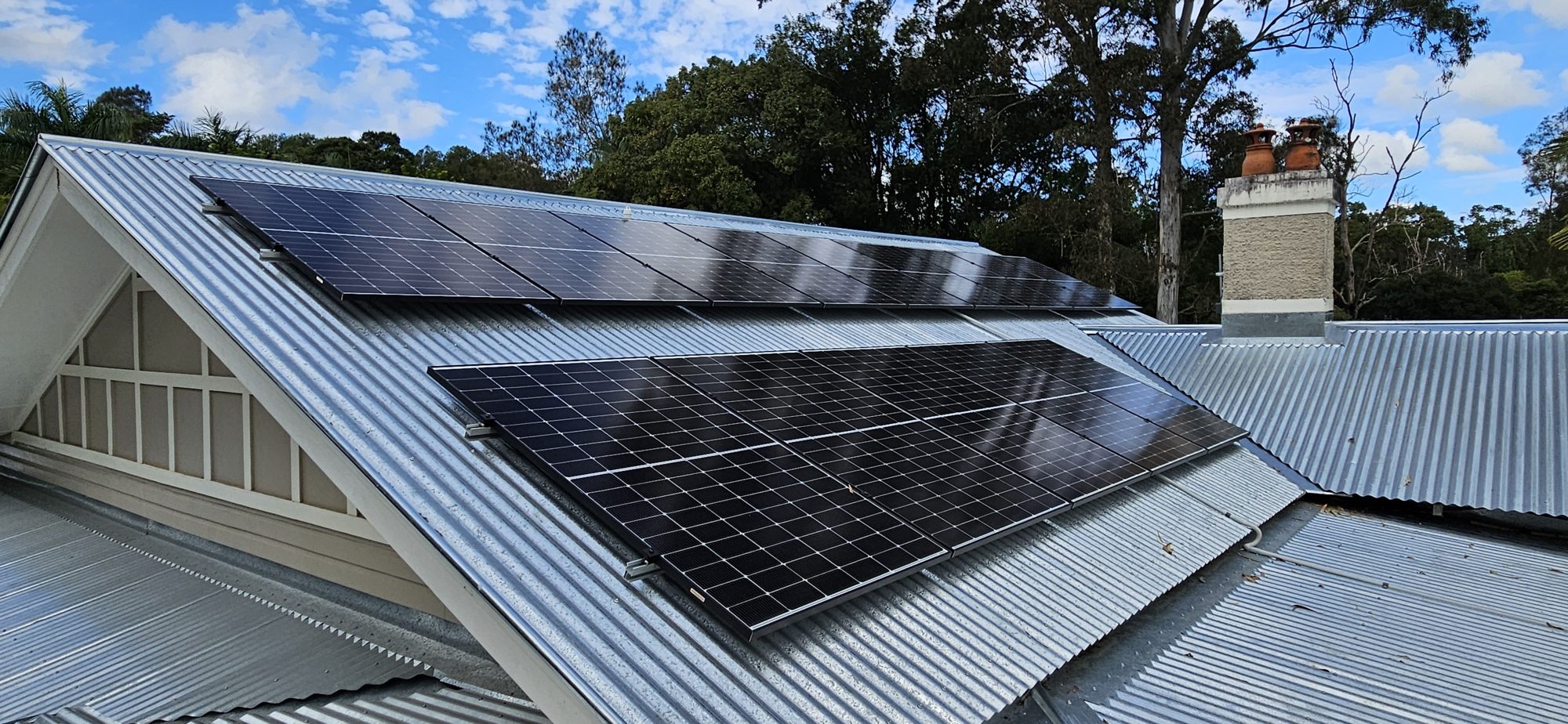
Why people add panels
- an EV or a new heavy load that was not there when the system was installed
- a new battery that needs more solar to charge it
- a bigger household, a home office or a pool
- a roof face that has become shaded by tree growth, where an array on another roof face helps
The inverter decides the options
Your inverter is the main limit, and the first thing we check:
- Spare capacity and inputs. Many inverters can handle somewhat more panel capacity than their rating, but not unlimited. They also have a set number of panel inputs, with voltage and current limits per input.
- Older inverters. An older model may be out of warranty, may no longer have support, or may not work with a battery. In that case, replacing it with a hybrid inverter that is ready for a battery often makes more sense than extending.
- A second inverter. Adding a separate inverter and a new array leaves the old system alone, and is a clean answer where the old inverter is full.
- Battery-ready design. If a battery is likely within a couple of years, we design the extension to suit the battery you will choose. See adding a battery to existing solar.
Mixing old and new panels
Panels in a string share the same current, so the weakest one sets the pace. New, higher-wattage panels on the same string as older, smaller ones will usually be held back to the older panels’ level. Panels facing different directions also need separate inputs. For that reason we normally keep new panels on their own input, string or inverter. If a roof face is shaded, we say so before we recommend panels.
Which panels we add
We install AIKO and Jinko panels. Both are N-type panels and installers rate them highly. AIKO suits tight roofs and partial shade, and Jinko suits straightforward roofs with room. See AIKO vs Jinko. The new panels are chosen to suit what is already on the roof and what the inverter can take.
Approvals and STCs
- Essential Energy. A change in generation capacity generally needs a new connection application, and your export limit may apply to the new total. See solar export limits.
- STCs for the extra panels. The Clean Energy Regulator allows an upgrade to claim STCs as an “extension system” when the total system after the upgrade is no more than 100 kW and the components meet the approval requirements. Panels that replace ones that already received STCs do not earn more. The Regulator also warns that expanding a system before its first STC claim has been approved can put eligibility at risk, so timing matters. We handle the paperwork and tell you what applies to your case.
- Safety. The new work must meet current standards and be done by a licensed electrician. We are a fully licensed NSW electrical contractor.
How we handle it on our jobs
- You send 1 to 2 recent power bills and details of your current system (the inverter model is on a label and in your app or paperwork).
- We tell you on the call whether it looks like extra panels, a battery, or both.
- On the face-to-face site visit we check the roof, the inverter, the switchboard and the battery position, if a battery is planned.
- Our own electricians design and install it, with no subcontractors, and we handle the application and the STC paperwork.
We are straight with you if an old system is not worth extending. We only service systems we can properly support.
Questions we get asked
Can I just add more panels to my existing system?
Sometimes. It depends on your inverter’s capacity, its panel inputs, the roof space and your Essential Energy connection. Where the inverter is at its limit, the options are a second inverter or replacing the inverter. We check on the site visit.
Can I mix new panels with my old ones?
Often yes, but not on the same string. Panels of different wattage, age or brand should not share a string, because the weakest panel drags the string down. We normally put new panels on their own input or their own inverter.
Do the extra panels earn STCs?
They can. The Clean Energy Regulator treats an addition as an extension system, the components must be approved, and the whole system after the upgrade cannot exceed 100 kW. Replacing panels that already received STCs does not earn more.
Do I need approval from Essential Energy?
Yes. A change to a connected solar system usually needs a connection application, and your export limit may apply to the new total. We prepare and submit it for you.
Is it better to add panels or add a battery?
It depends on when you use power. If your problem is evening use, a battery usually does more than extra panels. If you are importing power during the day, more panels can help. We look at your bills and tell you.
Sources
Last checked 6 October 2026.
- Clean Energy Regulator, Small-scale renewable energy systems (upgrades, extension systems)
- Clean Energy Regulator, Small-scale technology certificates
- Essential Energy, Small Scale Solar Connections customer summary
- SolarQuotes, Best Solar Panels In Australia 2026: Installer’s Choice Awards (30 June 2026; 125 installers; AIKO 1st, Jinko 2nd)
Related pages
- AIKO solar panels
- Jinko solar panels
- AIKO vs Jinko
- Adding a battery to existing solar
- Solar export limits
- Your rebates
Talk to us
Check Your Battery Rebate & 0% Loan
Leave your name and mobile. We’ll text you within minutes to get your rebate and 0% loan worked out.
★★★★★
Rated 5.0 from 49 Google reviews
✓Local electricians, no subcontractors
✓No obligation, takes 30 seconds
✓25-year workmanship warranty
Find us on Google Maps to read our reviews, or follow our installs on Facebook and Instagram.