
Whole-Home vs Essential-Circuits Battery Backup
Short answer. Whole-home backup powers every circuit from the battery in a blackout, while essential-circuits backup powers only the circuits you choose. A typical Sun Connect Solar install gives full home backup, running all circuits, unless you ask us to leave some out, such as an EV charger.
★★★★★ Rated 5.0 from 49 Google reviews · read them on Google · read them on our reviews page
“Backup” can mean two quite different things, and it is worth settling which one you want before you choose a battery. Here is how each works, what stays on, and what we normally do.
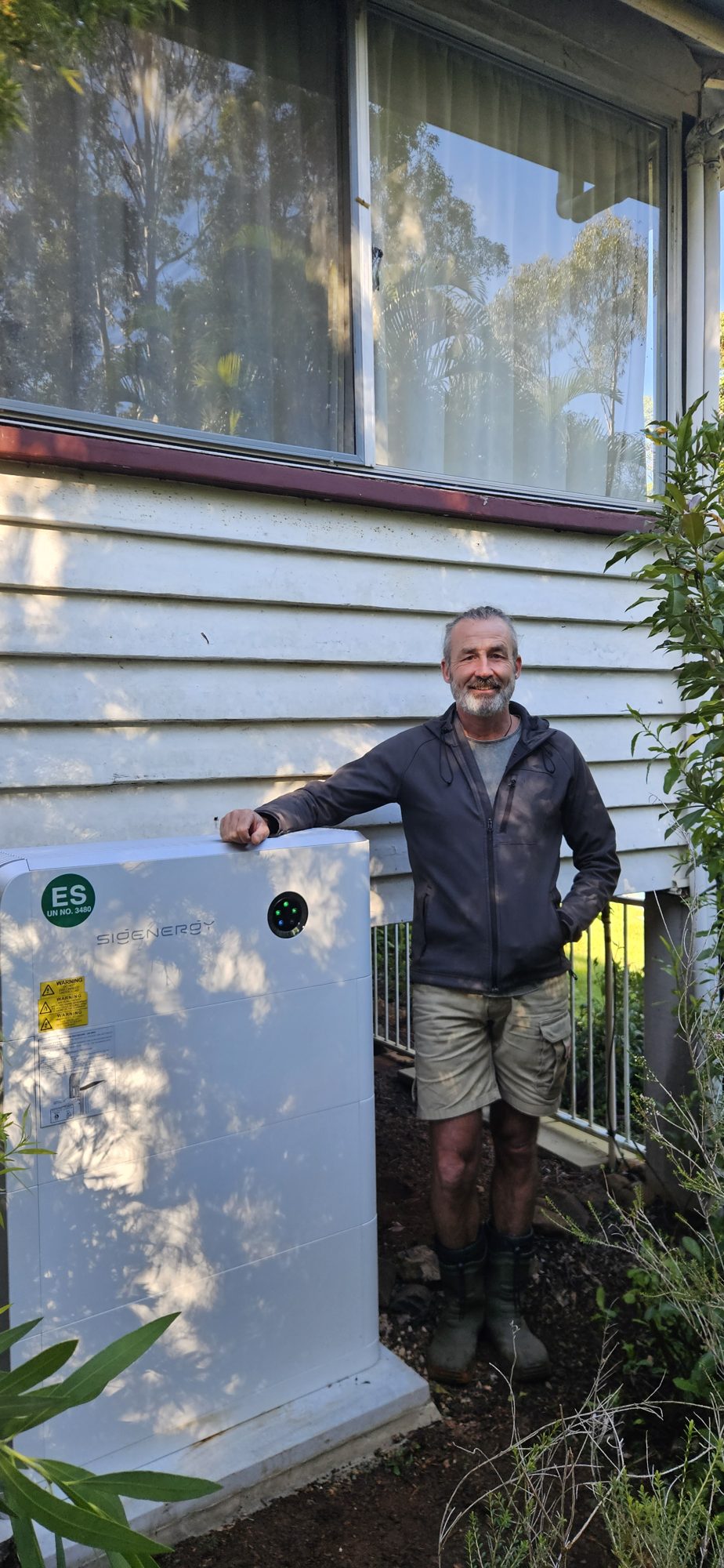
Whole-home backup
With whole-home backup, when the grid fails, the system disconnects from the grid and powers your whole switchboard from the battery and solar. Every circuit that was working a minute ago keeps working, within the limits of the inverter’s output and the battery’s stored energy. It is the simplest to live with, because you do not have to remember which socket is on a backed-up circuit.
This is what a typical Sun Connect Solar install gives you. We run all circuits unless you ask us to leave some out, such as an EV charger.
Essential-circuits backup
With essential-circuits (partial) backup, only chosen circuits are connected to the backup output, normally lights, the fridge, internet and a few power points. Everything else goes off in a blackout. This can be done with a separate backup board, or by moving some circuits across, and it adds electrical work at install.
Essential-circuits backup can suit you if:
- you want the battery to last as long as possible in a long outage
- your supply is three-phase but the battery is single-phase, so only one phase can be backed up (see single-phase vs three-phase)
- you have large loads you would never run in a blackout
How the switchover works
A backup system has a device that decides when the grid is gone. In most home batteries this is a gateway or an automatic transfer arrangement. When it senses the grid is lost, it opens the connection to the grid so your system does not feed power into a dead line, which protects network workers. Then it powers your home from the battery. When the grid returns, it reconnects and carries on. Sigenergy uses a gateway for this, and GoodWe’s ESA has its own backup output. The manufacturers publish their own switching times, so we do not repeat figures here.
What limits backup, either way
- Inverter output (kW) is how much you can run at once. Several heavy appliances at the same time can exceed it.
- Battery energy (kWh) is how long you can run. A bigger battery lasts longer, and a small load lasts longer than a big one.
- Solar helps in the daytime. A system with solar can top up the battery during a blackout on a sunny day.
- Battery reserve setting. Some systems keep a minimum charge in reserve for blackouts. We set it with you.
We do not promise how many hours your home will run, because it depends on the season, the weather and what you use. We explain what is realistic for your set-up.
How we handle it on our jobs
- Site visit: we find where the battery goes in a compliant position, check the switchboard and RCBOs, and ask you what you want to keep running.
- Design: full home backup unless you ask us to leave circuits out, with the heavy loads called out and agreed.
- Install and test: our own electricians install it, test the switchover before we leave and show you how to check the backup yourself.
- Aftercare: if it does not switch over when you expect, call us on 0483 903 020.
Help guides for owners: check your Sigenergy backup is working and why a battery did not switch over in a blackout. For the full picture, see blackout backup batteries for Northern Rivers homes and what size battery you need.
Questions we get asked
Does a battery keep my whole home on in a blackout?
It can. A typical Sun Connect Solar install gives full home backup, running all circuits, unless you ask us to leave some out, such as an EV charger. How long it runs depends on the battery size and what you use.
Can I run my air conditioning and oven in a blackout?
That depends on the inverter’s output and the battery’s stored energy. Big loads draw a lot and drain a battery fast. We talk through your biggest loads on the site visit and set it up the way you want, with a clear idea of how long it will last.
Will my power switch over instantly?
Switchover is quick, and lights and most appliances carry on or restart in moments. It is not guaranteed to be seamless for every device, so a computer with no UPS or a clock may still reset. We do not promise zero interruption.
Why would I leave circuits out?
Common reasons are an EV charger, a pool pump, an electric hot water element or a workshop with large motors. Leaving them off saves the battery for the things you want during an outage.
What if my battery did not switch over?
See our guide on why a battery may not have switched over in a blackout. If we installed it, call us on 0483 903 020 and we work through it with you.
Sources
Last checked 6 October 2026.
Related pages
- Blackout backup batteries for Northern Rivers homes
- Single-phase vs three-phase
- What size battery do I need?
- Sigenergy batteries
- GoodWe batteries
- Switchboard upgrades and RCBOs
Talk to us
Check Your Battery Rebate & 0% Loan
Leave your name and mobile. We’ll text you within minutes to get your rebate and 0% loan worked out.
★★★★★
Rated 5.0 from 49 Google reviews
✓Local electricians, no subcontractors
✓No obligation, takes 30 seconds
✓25-year workmanship warranty
Find us on Google Maps to read our reviews, or follow our installs on Facebook and Instagram.
Related: Can I charge my EV in a blackout? · Does my solar work in a blackout?